What Is Juneteenth? It is America’s second independence day — a federal holiday observed every June 19 that commemorates the day in 1865 when enslaved people in Galveston, Texas, finally learned they were free, more than two years after the Emancipation Proclamation. Known as Juneteenth, Jubilee Day, Freedom Day, and Emancipation Day, the holiday has grown from a regional Texas celebration into a nationwide observance of freedom, resilience, and Black American culture. In 2021 it became the first new federal holiday in nearly four decades, and with Juneteenth 2027 falling on Saturday, June 19, 2027, millions of Americans are planning cookouts, parades, festivals, and educational events around the date. This guide explains the full history, meaning, and modern traditions of Juneteenth so you can understand and honor it properly.
The Story Behind What Is Juneteenth
To answer “what is Juneteenth” fully, you have to go back to the final months of the Civil War and the summer that followed. The name itself is a portmanteau of “June” and “nineteenth,” and the story behind the date is one of the most dramatic in American history — a moment when freedom arrived late, but changed everything.
January 1, 1863: The Emancipation Proclamation
On New Year’s Day 1863, President Abraham Lincoln issued the Emancipation Proclamation, declaring that all enslaved people in the Confederate states “are, and henceforward shall be free.” The proclamation was a watershed moment — it transformed the Civil War from a fight to preserve the Union into a war for freedom, and it allowed Black men to enlist in the Union Army and Navy. Yet the proclamation’s practical reach was limited: it applied only to states in rebellion, and enforcement depended entirely on the advance of Union troops. In remote Texas, far from the main theaters of war and with few Union soldiers present, the proclamation changed almost nothing in daily life. Enslavers in Texas either never received the news or actively suppressed it, and many continued to hold people in bondage through the rest of the war.
April–June 1865: The War Ends, Freedom Waits
General Robert E. Lee surrendered at Appomattox Court House on April 9, 1865. The last major Confederate field army surrendered in Texas in May and June. President Lincoln was assassinated on April 14, 1865, before he could oversee Reconstruction. Through all of this, roughly 250,000 enslaved people in Texas remained in bondage — legally free under the Emancipation Proclamation, but with no one to enforce it and, in many cases, no knowledge of it at all.
June 19, 1865: Freedom Comes to Galveston
On June 19, 1865, Union Major General Gordon Granger arrived in Galveston, Texas, with some 2,000 federal troops. He issued General Order No. 3, which announced: “The people of Texas are informed that, in accordance with a proclamation from the Executive of the United States, all slaves are free. This involves an absolute equality of personal rights and rights of property between former masters and slaves.” The reaction among the newly freed people was immediate and joyous — singing, shouting, dancing, and prayer. That first celebration in Galveston is the seed from which every Juneteenth observance has grown. The following year, in 1866, freed people in Texas organized the first official Juneteenth celebrations, and the date became an annual tradition.
Why June 19 Matters: A Timeline of Juneteenth History
The journey from a Texas emancipation celebration to a federal holiday took 156 years. The table below traces the key milestones.
| Year | Milestone | Why It Matters |
|---|---|---|
| 1863 | Emancipation Proclamation issued (Jan. 1) | Declared freedom for enslaved people in Confederate states, but unenforced in Texas |
| 1865 | General Order No. 3 in Galveston (June 19) | The original Juneteenth — freedom reaches Texas’s 250,000 enslaved people |
| 1866 | First organized Juneteenth celebrations in Texas | Freed people formalize June 19 as an annual day of remembrance |
| 1872 | Emancipation Park purchased in Houston | Four formerly enslaved men buy 10 acres so Black Texans have a place to celebrate |
| 1890s–1910s | Juneteenth spreads to neighboring states | Texas migrants carry the tradition to Louisiana, Arkansas, Oklahoma, and California |
| 1980 | Texas makes Juneteenth a state holiday | The first state to grant official recognition, thanks to legislator Al Edwards |
| 2021 | Juneteenth National Independence Day Act signed (June 17) | Juneteenth becomes the 12th U.S. federal holiday — the first new one since 1983 |
| 2026 | Juneteenth observed Friday, June 19, 2026 | Most recent observance; federal offices closed, celebrations nationwide |
| 2027 | Juneteenth falls Saturday, June 19, 2027 | Next observance — federal employees get Friday, June 18 as the observed day |
The Meaning of Juneteenth Today
Modern Juneteenth is three things at once: a commemoration of emancipation, a celebration of Black American culture and achievement, and a civic reminder that freedom in America has always been a work in progress. For many Black Americans, it is the true Independence Day — the day freedom became real for everyone. For the country as a whole, it is an invitation to reflect on the unfinished work of equality while celebrating the resilience, creativity, and contributions of Black Americans across every field: music, food, literature, science, sports, and public life.
What Juneteenth Is Not
Juneteenth is sometimes confused with other observances, so it helps to be clear. It is not “Black July 4th” in the sense of replacing Independence Day — many families celebrate both, each on its own terms. It is not only a Texas holiday anymore, though Texas is its birthplace. And it is not a day of mourning: while it remembers slavery’s cruelty, the dominant spirit is jubilation — the word “Jubilee” in “Jubilee Day” comes from the biblical Year of Jubilee, when debts were forgiven and the enslaved were set free. Joy is the point.
Juneteenth Traditions and Symbols
Over 160 years, Juneteenth has developed a rich visual and cultural language. Understanding the symbols helps you celebrate authentically and avoid common missteps.
The Colors: Red, Black, and Green
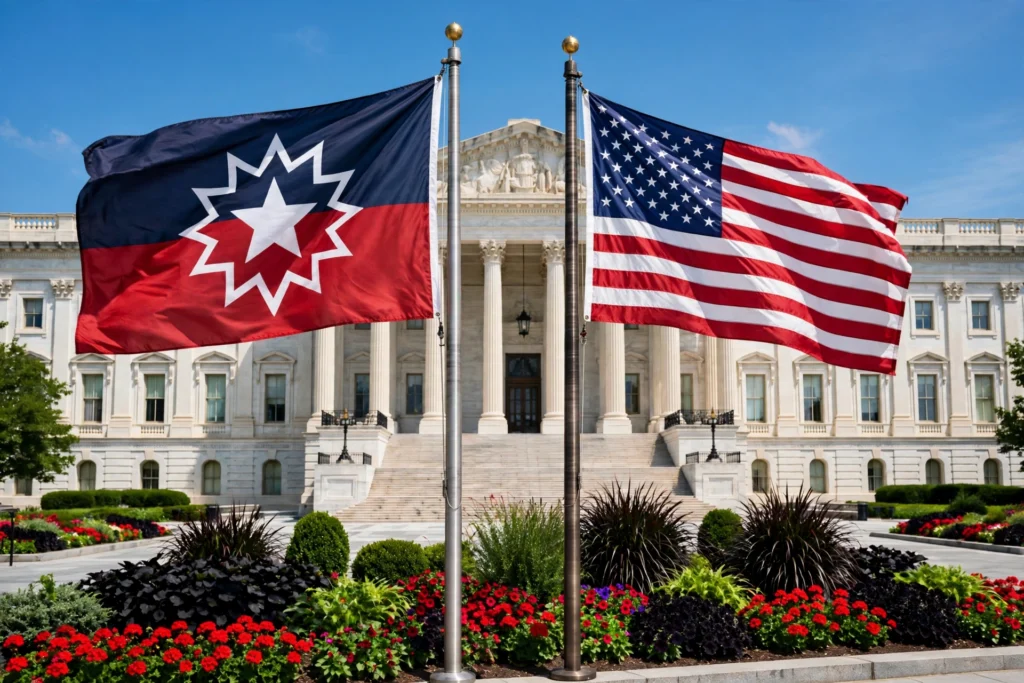
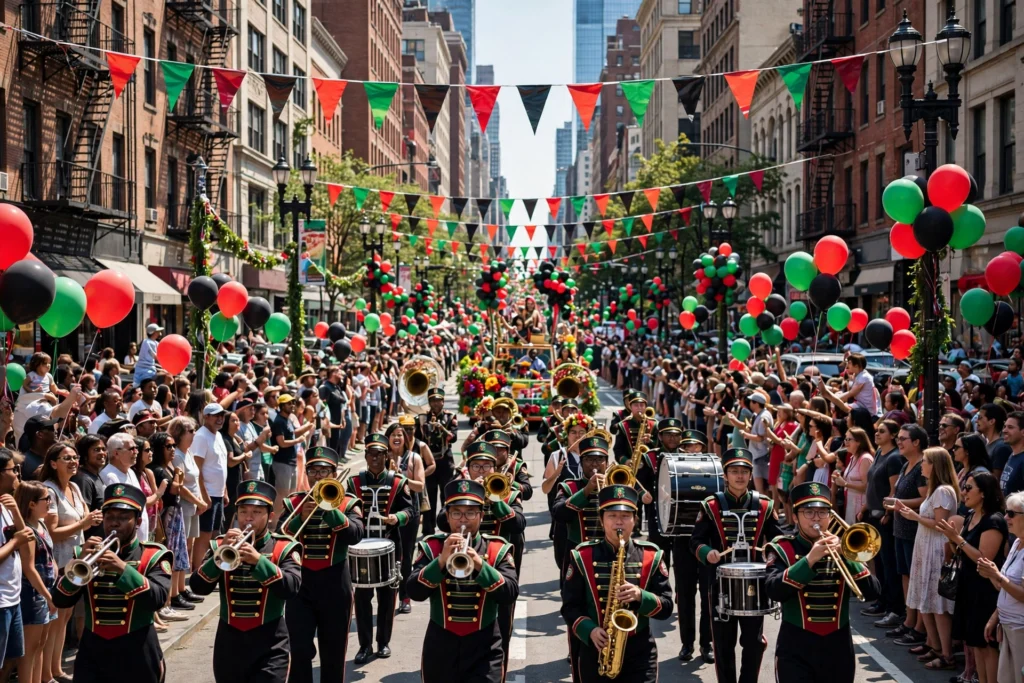
The traditional colors of Juneteenth are red, black, and green — the Pan-African flag colors adopted from the flag created by Marcus Garvey’s Universal Negro Improvement Association in 1920. Red stands for the blood shed in the struggle for liberation, black represents Black people and their unity, and green symbolizes the land and future growth. You will see these colors in Juneteenth decorations, clothing, parade floats, and food presentations. The official Juneteenth flag, created by activist Ben Haith in 1997, adds a bursting star on a red-and-blue field — the star representing Texas (the Lone Star State, where Juneteenth began) and a new freedom bursting across the land.
Traditional Foods and Drinks
Food is central to Juneteenth, and there is a beautiful symbolism in it: red foods and drinks dominate the table. The red symbolizes the resilience and sacrifice of enslaved ancestors. Classic Juneteenth red foods include red velvet cake, strawberry soda and strawberry pie, hibiscus tea (sometimes called “red drink”), watermelon, barbecue with red-tinted sauces, and hot links. The barbecue tradition traces back to those first Texas celebrations, where slow-smoked meats fed entire communities. Soul food staples — collard greens, black-eyed peas, cornbread, fried chicken, potato salad — round out the feast. If you attend or host a Juneteenth cookout, bringing a red drink or red dessert is a thoughtful gesture that shows you understand the tradition.
Music, Parades, and Community Gatherings
Juneteenth celebrations have always centered on gathering. The earliest observances featured prayer services, speeches from elders, and readings of the Emancipation Proclamation — a practice that continues at many events today. Over time the format expanded: parades with marching bands and step teams, gospel and R&B concerts, rodeos (a nod to Texas’s Black cowboy heritage), beauty pageants crowning “Miss Juneteenth,” baseball games, fishing, and massive community cookouts. Music runs through it all — from spirituals and gospel to jazz, blues, hip-hop, and go-go. Modern city festivals often run for days and draw tens of thousands of attendees.
Juneteenth 2027: What to Know
Juneteenth 2027 falls on Saturday, June 19, 2027 — a weekend date that makes it one of the most accessible federal holidays of the year for celebrations. Because the holiday lands on a Saturday, federal government offices will observe it on the preceding Friday, June 18, 2027. State and local practices vary, but most employers who recognize federal holidays give staff either the Friday or the Saturday off.
How to Observe Juneteenth Respectfully
- Learn the history first. Read General Order No. 3, the Emancipation Proclamation, and accounts of the first celebrations — context transforms the day from a day off into a day of meaning.
- Support Black-owned businesses. Many cities organize Juneteenth markets and vendor fairs; spending your dollars there is a direct way to honor the day.
- Attend a local celebration. Parades, festivals, and educational events happen in nearly every major city — check your city’s official events calendar as June approaches.
- Cook the traditional foods. A Juneteenth menu of barbecue, red velvet cake, and hibiscus tea connects you to 160 years of tradition.
- Teach the kids. Juneteenth is an ideal moment for age-appropriate conversations about freedom, fairness, and history — see our guide to Juneteenth activities for kids.
- Use the right colors. Red, black, and green are the traditional Juneteenth colors — not red, white, and blue.
Frequently Asked Questions About What Is Juneteenth
What does the word Juneteenth mean?
Juneteenth is a blend of “June” and “nineteenth” — the date of June 19, 1865, when enslaved people in Galveston, Texas, learned of their freedom. It is also called Jubilee Day, Freedom Day, Emancipation Day, and Black Independence Day.
Who freed the slaves on Juneteenth?
No single person “freed” them on that day — the Emancipation Proclamation had legally freed enslaved people in Confederate states in 1863. What happened on June 19, 1865, was enforcement and announcement: Union General Gordon Granger arrived in Galveston and issued General Order No. 3, finally bringing the news and the troops to back it up.
Is Juneteenth a federal holiday?
Yes. Juneteenth National Independence Day became a U.S. federal holiday on June 17, 2021, when President Joe Biden signed it into law. It is the first new federal holiday since Martin Luther King Jr. Day was established in 1983. For the full breakdown of how it is observed, see our guide on whether Juneteenth is a federal holiday.
What is closed on Juneteenth?
Federal offices, the U.S. Postal Service, most banks, and the stock markets close. Many state and local government offices close as well. Most retail stores and restaurants stay open, though hours can vary. Check our what’s open and closed on Juneteenth 2027 guide for the detailed rundown.
Why are red foods traditional on Juneteenth?
Red foods and drinks — red velvet cake, strawberry soda, hibiscus tea, watermelon — symbolize the blood, sacrifice, and resilience of enslaved ancestors. The tradition also traces to West African culinary customs where red drinks made from hibiscus and kola nuts were common.
How do you say Happy Juneteenth?
“Happy Juneteenth!” is the standard greeting, and it is warmly welcomed. Some people also say “Happy Freedom Day” or “Happy Jubilee Day.” There is no complicated etiquette — genuine goodwill and a little knowledge of the history are all you need.
What is the difference between Juneteenth and the Emancipation Proclamation?
The Emancipation Proclamation (January 1, 1863) was the legal declaration of freedom; Juneteenth (June 19, 1865) marks the day that freedom was actually announced and enforced in the last holdout state, Texas. One is the promise, the other is the delivery.
How Juneteenth Spread Beyond Texas
For its first century, Juneteenth was primarily a Texas tradition — and fiercely protected as one. But two great migrations of Black Americans carried it across the country. During and after World War I, and again in the 1940s and 1950s, millions of Black Southerners moved to industrial cities in the Midwest, West, and Northeast. They packed their Juneteenth traditions with them: the cookouts, the red soda, the parades, the reading of the Emancipation Proclamation. By the 1960s and 1970s, Juneteenth celebrations had taken root in Los Angeles, Oakland, Chicago, Denver, Milwaukee, and Minneapolis.
The civil rights era gave the holiday new energy. Activists in the 1960s and 1970s embraced Juneteenth as a symbol of self-determination and cultural pride, organizing some of the largest celebrations the country had seen. In 1979, Texas State Representative Al Edwards — who had grown up attending Juneteenth celebrations — introduced the bill that made Texas the first state to recognize Juneteenth as an official holiday, effective January 1, 1980. Other states followed slowly through the 1990s and 2000s, and by 2020 every state except a handful recognized Juneteenth in some form. The murder of George Floyd in May 2020 and the nationwide racial justice protests that followed created the political momentum for federal recognition: corporations began observing the day, the House and Senate passed the Juneteenth National Independence Day Act with overwhelming bipartisan support, and President Biden signed it on June 17, 2021 — just two days before that year’s celebration.
Juneteenth in Popular Culture
Juneteenth’s profile has risen dramatically in American culture. Television shows, films, and documentaries now routinely feature Juneteenth storylines and explainers. Major retailers sell Juneteenth-themed merchandise (not without occasional controversy over commercialization), the National Park Service hosts Juneteenth programs at historic sites, and the Smithsonian’s National Museum of African American History and Culture mounts special exhibitions each June. Social media has become a powerful amplifier: each year, hashtags and viral history threads introduce millions of young Americans to the story of Galveston for the first time. This cultural momentum is one reason Juneteenth 2027 is expected to see record participation — the holiday is still young as a national observance, and every year more families make it a tradition.
Juneteenth Dates: Past and Future
Because Juneteenth is a fixed-date holiday — always June 19 — planning is simple, but the day of the week shifts each year, which affects how it is observed. The table below shows recent and upcoming dates so you can plan ahead.
| Year | Juneteenth Date | Day of Week | Federal Observed Day |
|---|---|---|---|
| 2024 | June 19, 2024 | Wednesday | Wednesday, June 19 |
| 2025 | June 19, 2025 | Thursday | Thursday, June 19 |
| 2026 | June 19, 2026 | Friday | Friday, June 19 |
| 2027 | June 19, 2027 | Saturday | Friday, June 18 (observed) |
| 2028 | June 19, 2028 | Monday | Monday, June 19 |
| 2029 | June 19, 2029 | Tuesday | Tuesday, June 19 |
| 2030 | June 19, 2030 | Wednesday | Wednesday, June 19 |
When Juneteenth falls on a weekend, as it does in 2027, federal employees receive the nearest weekday off — Friday, June 18 in this case. Many private employers follow the same convention, so a Saturday Juneteenth often means a three-day weekend for office workers. Community celebrations typically still happen on Saturday itself, June 19, making 2027 an ideal year for parades and festivals with maximum attendance.
More Questions About What Is Juneteenth
Do all states recognize Juneteenth?
Nearly all do. Texas led the way in 1980, and state-level recognition spread over the following decades. Federal recognition in 2021 standardized the holiday nationwide, though a few states still do not list it as a paid state holiday for their employees. The practical effect for most Americans is the same: banks, federal offices, and the markets close, and celebrations happen everywhere.
Is Juneteenth a paid holiday?
For federal employees, yes — it is a paid federal holiday. In the private sector it depends on the employer. Since 2021, a rapidly growing number of companies have added Juneteenth to their paid holiday calendars, and surveys show adoption climbing every year. If your employer has not added it yet, 2027 is a good year to ask — the Saturday date makes it an easy, low-cost addition.
What is the Juneteenth flag?
The Juneteenth flag was created in 1997 by activist Ben Haith, founder of the National Juneteenth Celebration Foundation. It features a white five-pointed star on a blue-and-red background with a bursting outline. The star represents Texas and the freedom of Black Americans in all 50 states; the burst symbolizes a new beginning; and the arc across the middle represents a new horizon of opportunity.
How long has Juneteenth been celebrated?
Continuously since 1866 — over 160 years. That makes it one of the oldest African American holidays in the United States, older than Kwanzaa (1966) by a full century. The celebrations never stopped; they simply grew from Texas outward until the whole country joined in.
Whether you spend Juneteenth 2027 at a parade, a backyard cookout, or simply learning the history with family, the day’s meaning stays the same: freedom delayed is not freedom denied. Explore more holiday guides in our Holidays section — including what is open on Columbus Day and what is open on Thanksgiving Day — and if you are planning the menu, our Juneteenth food traditions guide has the classic red foods and recipes to get you started.